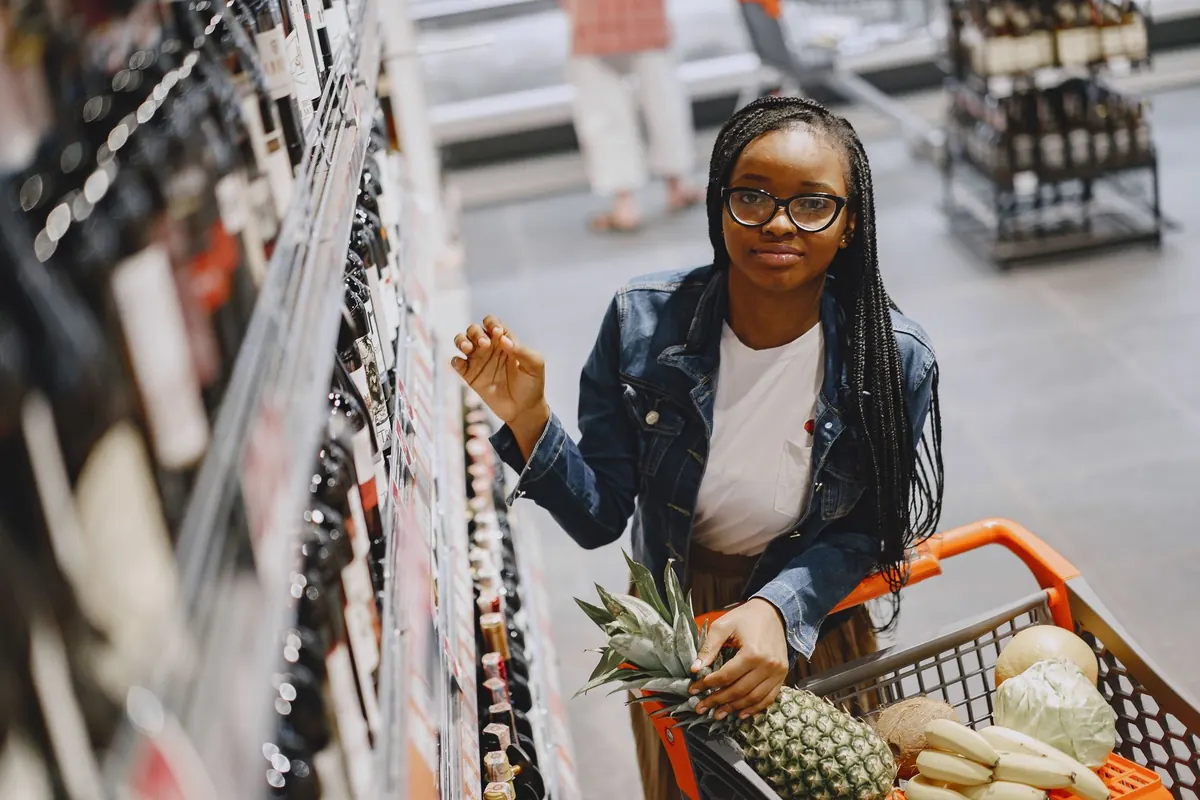
Stand in front of a supermarket white wine shelf for more than thirty seconds and the trick becomes obvious: everything looks like a bargain. Bottles lean forward, promises are stacked three deep, and the information that actually matters — what's in the bottle, how sweet it is, whether it will taste good on a Tuesday night — sits in small print on the back. You don't need to be a sommelier to cut through it. You need a short list of things to check, in the right order.
Start with the grape, not the picture
A named grape variety is the single most useful thing on a front label. If a bottle says Sauvignon Blanc, Riesling or Albariño and not much else, the producer is usually proud of what's inside. If it says "White Burgundy", "Cuvée Première" or simply "Vin de France", you're looking at a blend — not automatically a bad thing, but it does mean the style is being steered towards a broad, crowd-pleasing middle.
Learn four or five grapes and the shelf shrinks dramatically. Sauvignon Blanc: grassy, citrus, sometimes tropical. Chardonnay: entirely dependent on origin, lean and chalky in Chablis, round and buttery when oaked. Riesling: high acid, ranging from bone dry to lusciously sweet, which is exactly why you must read the back. Pinot Grigio: usually light, neutral, dry. Chenin Blanc: apple and honey, and one of the great bargains from South Africa.
Decode the sweetness before anything else
Sweetness is where most supermarket purchases go wrong, because a dry wine and an off-dry wine can wear near-identical labels. Front-label words such as "crisp", "zesty", "mineral" and "refreshing" point to dry. Words such as "aromatic", "ripe", "honeyed" or "tropical" lean sweeter and fruitier. The back label is the one to trust.
On European labels, sweetness terms travel with the wine, so it's worth knowing a handful:
- Dry — Sec (France), Trocken (Germany and Austria), Secco (Italy), Brut (sparkling).
- Off-dry — Demi-sec, Halbtrocken or Feinherb, Amabile. Note that Extra Dry on a Prosecco label actually means slightly sweeter than Brut.
- Medium — often shown simply as "medium dry" or "medium sweet" on a UK back label.
- Sweet — Moelleux (France), Dolce (Italy), the German dessert classifications, plus most Moscato.
Alcohol content is a decent clue too. A white at 8–9.5% abv has often kept some grape sugar, while a 13% Sauvignon Blanc will almost certainly be dry.
Acidity is what makes a white wine work
Acidity is the backbone of a white: it's the reason a glass of Chablis makes you want another sip, and the reason a soft, flabby white becomes tiring after half a glass. Cooler wine regions — the Loire, Chablis, Germany, Austria, England, coastal Chile — tend to give grapes with higher natural acidity. Warmer places give riper, softer, higher-alcohol wines.
Practical translation: with fish and a squeeze of lemon, anything fried, or a sharp goat's cheese, you want the cool-climate style. With something creamy, buttery or mildly spiced, a rounder white will sit better.
Read the back label in ten seconds
Once you've picked up a bottle, run this sequence. It takes less time than reading the shelf talker.
- Grape and origin. A named grape plus a named region is a good sign. A named grape plus a huge region is fine. No grape at all? Expect a blend.
- Vintage. For crisp styles — Sauvignon, Picpoul, Vinho Verde, Albariño — younger is better, so favour the most recent year. Richer oaked Chardonnay and Riesling can take a year or two in bottle, but supermarket shelves rarely hold wines that benefit from long ageing.
- Alcohol. Under 12.5% usually means lighter and more food-friendly. Over 13.5% will feel fuller and warmer.
- Sweetness term and the words around it. This is where you catch the off-dry Pinot Grigio you didn't want.
- Closure. A screwcap keeps a fresh white fresher. It is not a marker of quality either way.
Value picks worth hunting for
The best supermarket whites are rarely the ones with the biggest display. They are usually a grape or a region that hasn't become fashionable yet, sold under a quiet label.
- Picpoul de Pinet — the Languedoc's answer to Muscadet, sharply refreshing and often keenly priced.
- Muscadet Sèvre-et-Maine sur lie — lean, saline, brilliant with shellfish.
- Vinho Verde — low in alcohol, gently spritzy, inexpensive.
- Albariño from Rías Baixas, or its Portuguese cousin Loureiro.
- Grüner Veltliner and dry Austrian Riesling — peppery, precise, excellent with vegetables.
- South African Chenin Blanc, old vines especially, is one of the best-value whites on any UK shelf.
- Grillo and Catarratto from Sicily, or Vermentino from Sardinia and the Languedoc.
- English still Bacchus — worth trying whenever you spot it.
Own-label tiers are worth understanding, because they represent the supermarket's own buying judgement. The premium ranges — Tesco Finest, Sainsbury's Taste the Difference, Asda Extra Special, Morrisons The Best, Waitrose No.1, Aldi Specially Selected, Lidl Deluxe, M&S Collection — are usually where the interesting bottles hide. Entry-level own-label whites are often perfectly decent, but they tend towards a soft, gently sweet style designed to offend nobody.
Supermarket tactics that save real money
Multibuy discounts are the most common offer, usually a percentage off when you buy six bottles. The maths is simple: if you'd buy the wine anyway, it's a genuine saving. If you're adding bottles you don't want just to reach the threshold, it isn't. Check the unit price per bottle rather than the headline "was" price.
Also worth doing: buy two bottles of anything unfamiliar rather than one. Whites change noticeably after a year in a warm room or a hot car boot, and a single bottle is a poor sample. Store them somewhere cool and dark, and drink the crisp styles within a year or so. Serve lean, zesty whites colder than you think — but let a richer oaked white sit out of the fridge for ten minutes, because cold mutes flavour.
A sixty-second checklist for the shelf
Grape named, region named, vintage recent, alcohol in the range you want, a sweetness term that matches your plan, and a style you can picture drinking with tonight's dinner. If a bottle fails on grape or sweetness, put it back. If it passes, buy two.
If you're pregnant, managing a health condition or watching your alcohol intake, speak to a pharmacist or GP about what suits you rather than relying on a label. For everyone else, the best white wine in the supermarket is the one you actually enjoy, at a price you're happy to pay twice.
Photo: Gustavo Fring / Pexels